Capture
Acquire real streams from biosignal devices, bench hardware, field instruments, materials datasets, or circuit backends.
Renaissance Field Lite
This page separates the physical build surfaces from the homepage. The prototype lanes translate supported map findings into testable devices, field systems, sensor surfaces, and research workflows.
Prototype translation layer
The prototype layer begins after the measurement layer. Mirror Architecture, Codex 67, and the companion map identify recurring structure across artificial intelligence internals, biosignals, structured matter, quantum access, and field-response lanes. The prototype lanes then ask what can be built, instrumented, and tested from those findings.
Acquire real streams from biosignal devices, bench hardware, field instruments, materials datasets, or circuit backends.
Convert inputs into timestamped state vectors, signal-quality windows, device context, and control-ready comparison rows.
Send the mapped state into B.A.S.I.S., Mirror / LSPS orchestration, field tests, materials rows, or partner-ready workflow surfaces.
Physical build lanes
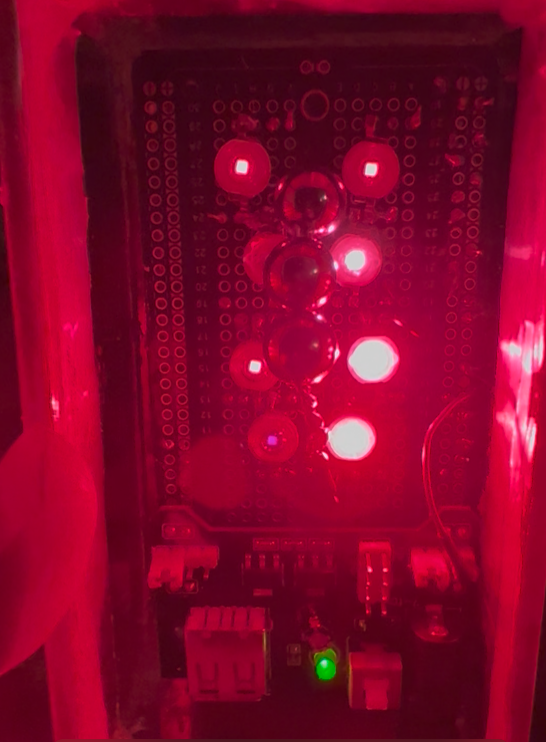
Infrared-linked sensing and recovery-support prototype built around modulated pulsed infrared, terahertz silicon spheres, and Codex 67 pulse-control logic. Public positioning stays in research and controlled biosignal-readout territory.
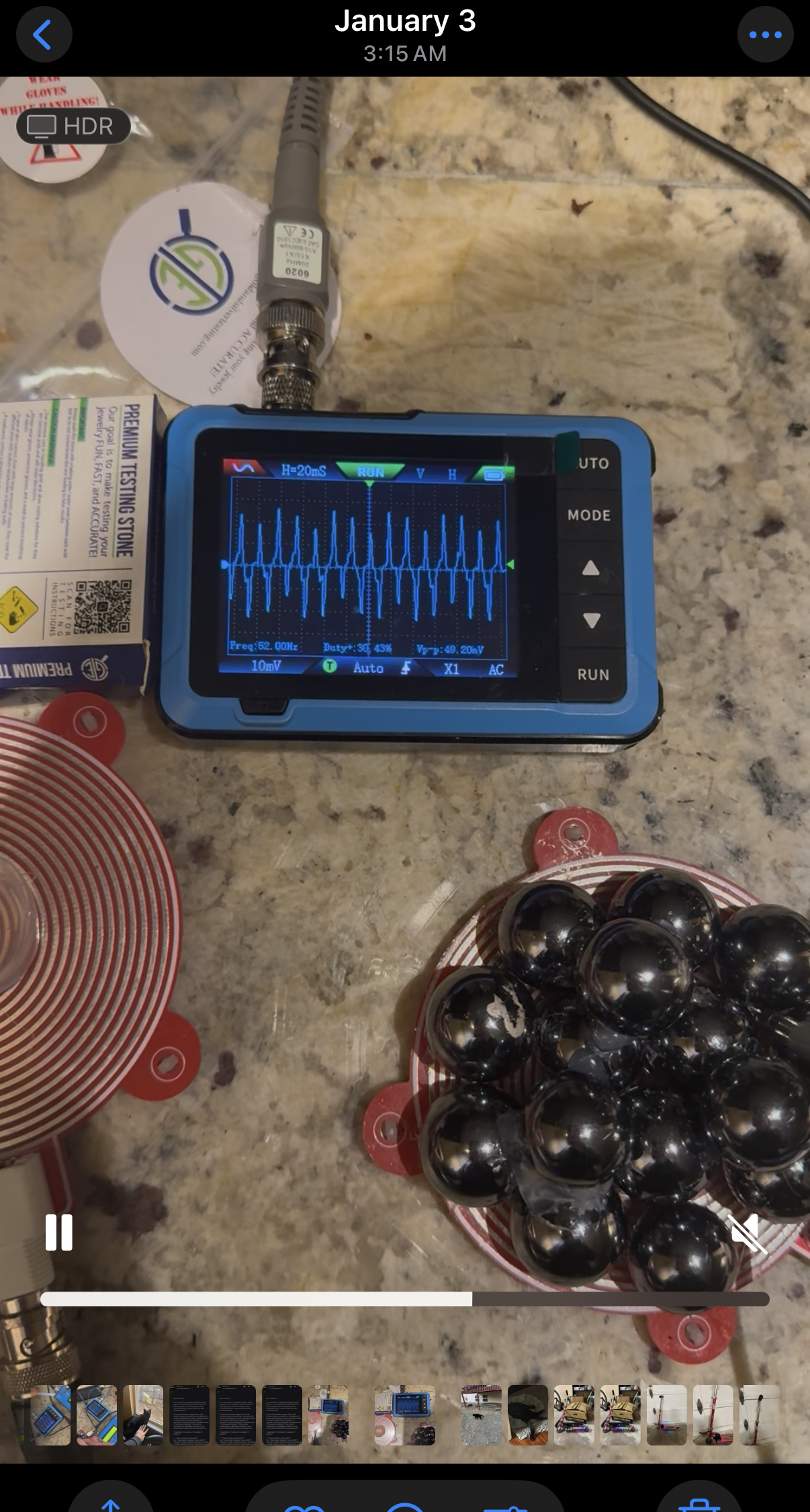
ARC15 is the topography and field-response prototype for the terahertz / acoustic lane. The 15-sphere array gives the architecture a physical surface for waveform, FFT, spectrogram, phase-lock, and field-geometry capture.
The base field-grade terahertz tuning chamber that later evolved into ARC15. It carries the chamber and sphere logic before the 15-sphere expansion and later topographic-stabilizer mapping.
Animal recovery-support documentation that motivates controlled HRV / EEG / recovery-state workflows. The public lane is framed as instrumentation, monitoring, and research support.
Open repositoryB.A.S.I.S. device lane
B.A.S.I.S. is the strongest near-term product surface. It can ingest HRV, EEG, fNIRS, PPG / SpO2, sleep, breath, motion, blood-pressure, GSR / EDA, CGM exports, lactate, hydration, and lab feeds, then route those streams into specialty-tuned views for care, recovery, research, sports performance, surgery support, and retail guided pathways.
Materials and environmental bridge
Safety logic rewards safe descendants and bounded mineralization, then rejects parent-only disappearance as a weak success condition.
Terahertz, spectral, and field-condition lanes are positioned as research surfaces for testing whether persistent-chain response can be instrumented under controls.
Formation energy, bandgap, energy above hull, defects, dopants, phonons, dielectric / optical rows, 2D materials, surfaces, confinement, and quantum-response targets remain the expanded data path.
Environmental fate, catalysis, water, minerals, electrochemistry, sensing, and field deployment lanes keep prototype work connected to real-world restoration and monitoring applications.